


Smith Vantage MIPS Ski Helmet Review


Comfort

Warmth

Ventilation

Weight & Bulk

Durability

Sustainability
Weight
1 lb. 2 oz.
Construction
Hybrid in-mold
Vents
21 (12 adjustable)
MIPS
Yes
Pros
Cons
Smith Vantage MIPS
Note: The Vantage was replaced by the Vantage 2 helmet for winter 2025-2026. For information on the updated model, see our Smith Vantage 2 MIPS review.
Smith helmets are comfortable in general—the brand is kind of like the Volvo or the Audi of the ski accessory world—and the Vantage MIPS is right in line. The interior is warm and thoughtfully padded throughout, with thicker padding around the crown, top of the head, and ears. Near the vents is thin padded mesh, but there’s little direct contact with your head there and we’ve had zero issues after extensive use. To dial in the fit, the Boa system wraps around your head comfortably and evenly and allows for micro-adjustments. Among ski helmets in general, the Vantage is top tier for comfort, which means a lot for a product that most people wear all day on the slopes.
To dive into the minutiae, resort skiers can get a small step up in comfort by opting for Smith’s Level MIPS (and women’s Liberty MIPS). This helmet offers best-in-class interior cushioning, with supportive yet plush padding covering the entire shell circumference. And the high-end Smith Nexus also gets a 5 out of 5 comfort rating due to its soft-touch interior, premium padding, and additional insulation. That said, both the Level and Nexus are built mostly for the resort, whereas the airier and lighter Vantage has crossover/backcountry chops, making it more versatile overall. One of our editors has worn the Smith Vantage MIPS line for many years and comfort always has felt top-notch.

Warmth is another strength of the Smith Vantage MIPS. Not accounting for the robust venting system (more on that below), the ski helmet uses high-quality padding that provides a healthy dose of insulation, along with thick ear pads that help keep heat in. One tester used the Vantage on warmer spring days, wearing a thin balaclava underneath as usual (she runs cold), which was easy to fit under the helmet. A second Better Trail tester in Colorado has used the Vantage on frigid days at Winter Park and Steamboat and his head has always stayed sufficiently warm (with the vents closed, of course). As mentioned above, the Smith Level runs a bit warmer than the Vantage with its resort focus and more robust padding, but the Vantage has done the job just fine for us.

For a helmet that can be used at the resort and in the backcountry, the ventilation provided by the Smith Vantage MIPS is stellar. One tester said that there were so many vents she couldn’t even count (we’ll do it for her and tell you that there are 21 vents to be exact, separated into two different adjustable systems). Twelve of the vents are adjustable: You can open up four vents toward the front of the head to dump a little bit of heat, and the rear opens up the garage door, so to speak, with an additional eight vents at the top and back of the head. And yes, you can even open one or both of the sliders partway to customize your ventilation even further. The net effect is a helmet that can be opened up on sunny, spring-like days for cooling, yet is warm enough to ski cold when closed up.
It’s worth noting that for backcountry specialists, a helmet like the Smith Summit MIPS wins out by a wide margin in the ventilation department. It’s much more porous in general, with large openings around the side of the head, and 31 vents in total. That said, the vents are not adjustable (i.e. they cannot be closed), but we simply wear a beanie or hat beneath the helmet on colder days. The larger point is that although you can find more ventilated options for backcountry travel, the Vantage has been a winner for years because it can do all of the things darn well.

Not to sound like a broken record here, but the Smith Vantage MIPS is competitively lightweight at 1 pound 2 ounces total, reaffirming its do-everything chops. For comparison, the Smith Level MIPS and Nexus MIPs both are one ounce heavier at 1 pound 3 ounces, respectively. At the lightweight end of the spectrum, resort skiers can get all the way down to just over 14 ounces with a helmet the Smith Method MIPS, although with some sacrifices like less comfort, the lack of an adjustment dial, inferior ventilation, and lower durability. On the flip side, backcountry lids like the aforementioned Smith Summit MIPS or Sweet Protection’s Ascender run about 1 pound even, but with much less versatility.
Weight aside, it’s worth noting that the Smith Vantage is not a low-profile, minimalist ski helmet. All of these comparisons come with compromises, but a lid like the POC Obex MIPS is more streamlined and sleek with a lower-profile design (this is not surprising given the company’s Swedish roots). But with that minimalist design comes lower levels of comfort and warmth, so the tradeoff is pretty clear. Our tester Vivika also likes the sleek Smith Code MIPS for her Pacific Northwest mountain adventures, although the temperatures are milder than other parts of the country with fewer big swings.

Smith snow helmets should last you for many years of use and abuse. Featuring a hybrid in-mold construction—the top layer of the helmet is a substantial ABS plastic, while the lower half is lighter—the Vantage MIPS is durable, long-lasting, and has a high-quality build overall. After many years of use in Colorado, our editor there has experienced almost zero issues with the helmet. All of the padding looks and feels like new, the Boa fit system continues to operate like butter, and the dual venting system is as smooth as ever. He did inadvertently stretch the goggle strap significantly by catching it on another piece of ski gear during transport, but this likely would have happened with any strap.
A couple of final things worth noting on the durability front: The top of the Smith Vantage MIPS will scratch if given the opportunity, which is common but worth considering if you care about the aesthetics (if so, we recommend using the included carry sack whenever possible). And given the mix of thinner in-mold material along the lower half of the helmet, you can technically find a tougher lid by opting for a full ABS plastic design (but this only really makes sense if you’re a park rat or freerider and are willing to make significant sacrifices in weight and bulk).
Select icon to view details:


Longevity
Choosing durable outdoor gear and keeping it in use for longer is one of the best ways to reduce environmental impact. Our proprietary longevity rating assesses factors like overall build quality, materials, fabric denier, component durability, and real-world performance. A green check indicates that we expect the product to be long-lasting relative to its peers, a yellow check mark indicates average longevity, and a red X indicates a product that may have a limited lifespan.
Recycled Materials
Recycled materials are prevalent in outdoor gear, with nylon, polyester, wool, and down among the most common, but the composition varies widely. A green check mark indicates the product is made with a substantial amount of recycled materials (100% recycled or the core fabric that makes up most of the product is recycled), a yellow check means it contains a moderate to small amount of recycled materials, while a red X means there are no recycled materials in the product.
Responsible Manufacturing
This criterion evaluates a brand’s commitment to fair wages, safe working conditions, and reducing environmental impact through certifications and programs like Fair Trade Certified, Fair Wear Foundation, Worldwide Responsible Accredited Production (WRAP), and the Fair Labor Association, while also recognizing brands that manufacture primarily in the U.S. or Europe under strict labor and environmental regulations. A green check mark indicates a brand meets our responsible manufacturing criteria, while a red X means it does not.
Recycled and/or Reduced Packaging
Packaging can add significant waste to outdoor gear purchases, so many brands work to reduce its impact by using recycled materials, incorporating Forest Stewardship Council-certified paper products, and minimizing plastic and paper use. A green check mark indicates a brand uses recycled or reduced materials across all of its packaging, a yellow check indicates moderate or limited use of recycled or reduced packaging, and a red X indicates the brand does not make either of these efforts.
Carbon Footprint Tracking
This criterion evaluates whether a brand measures, reports, and works to reduce its greenhouse gas emissions using established frameworks such as the Higg Index, Greenhouse Gas Protocol, or The Change Climate Project. A green check mark indicates a brand publicly reports greenhouse gas emissions data, sets clearly defined reduction targets, and uses established tracking frameworks such as Higg or The Change Climate Project. A yellow check mark indicates the brand tracks emissions and outlines reduction goals but provides limited data, lacks science-based verification, or does not clearly report progress. A red X indicates the brand does not appear to track greenhouse gas emissions or provides so little information that its efforts cannot be verified.
Annual Impact Report
Annual impact reports provide transparency and accountability by outlining a brand’s sustainability efforts across areas such as material sourcing, greenhouse gas emissions, waste, water use, supply chains, and packaging. A green check mark indicates a brand publishes a detailed, brand-specific impact report that closely aligns with our sustainability criteria and leaves little room for ambiguity. A yellow check indicates a brand provides some relevant sustainability reporting but lacks detail in key areas or is covered only briefly within a parent company report. A red X indicates a brand does not regularly publish an impact report.
MIPS Liner
In the words of our tester Vivika, “I always buy MIPS when I can for extra safety. I can’t tell what effect it has on the shape or comfort, but it makes me feel better knowing it’s there.” To our understanding, the science behind MIPS is real. It’s now used by a wide range of companies across the ski helmet category (and beyond), and there are a number of supporting studies that claim it can reduce certain types of head injuries. We understand that it’s difficult to quantify MIPS and safety in general, and will let you make the call on your noggin, but Smith does make a non-MIPS version of the Vantage for $245, or $30 less.
Koroyd
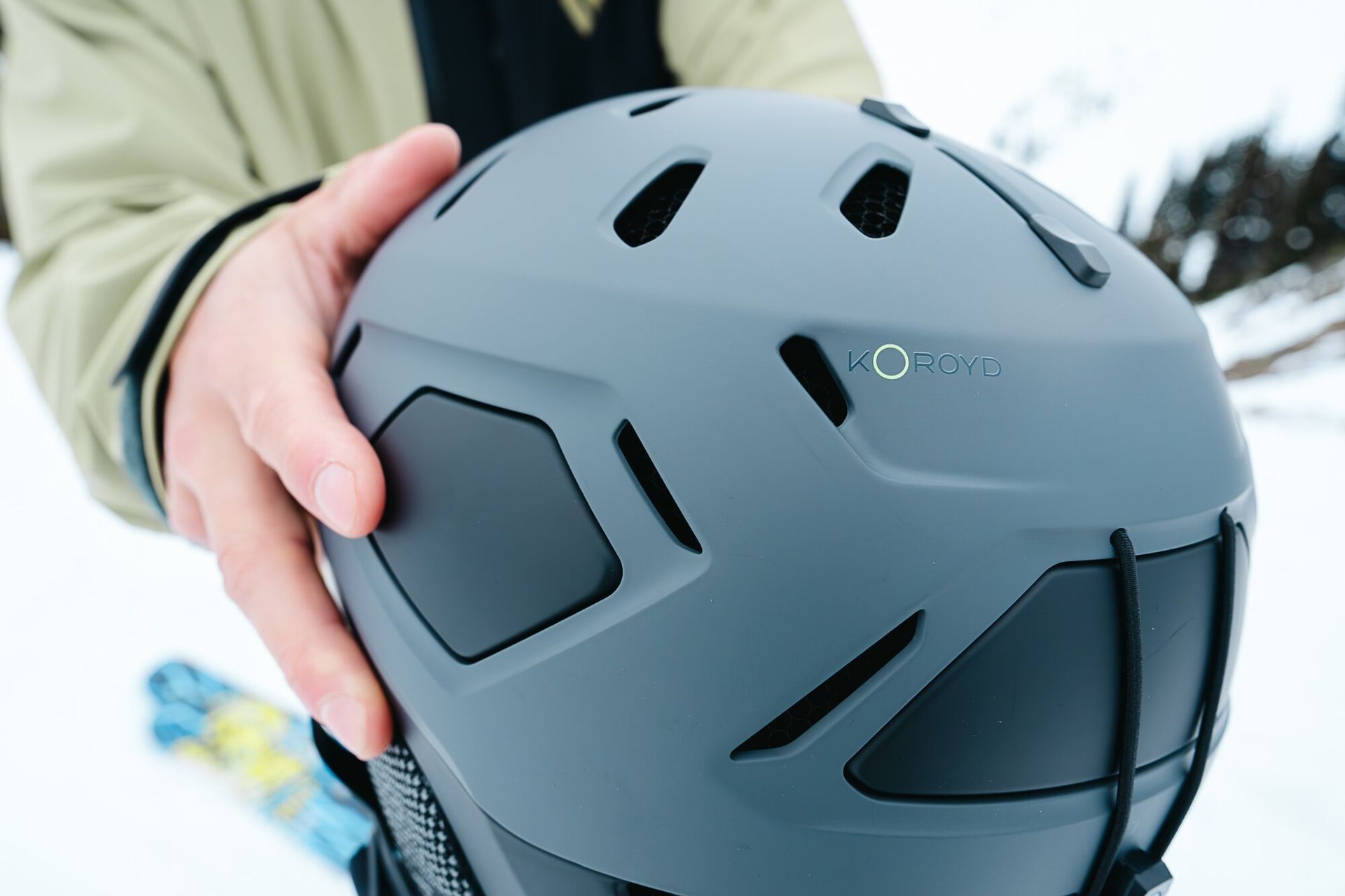
Koroyd is another safety feature that’s found on many Smith helmets including the Vantage. The honeycomb design is made up of a series of small tubes bonded together that fit between the hard plastic shell and foam interior. The tubes crumple on impact, absorbing energy while allowing air to flow through the straw-like openings. It’s worth noting that the Vantage features Zonal Koroyd on the top of the helmet, so less the premium Nexus, which covers the entirety of the helmet’s sides and top.
Adjustment System
The included Boa 360 adjustment system is our favorite for dialing in fit without pressure points. On the back of the Vantage is a little dial that you can twist to tighten (or loosen if needed) to get it snugly around your head. One tester was able to operate the Boa system with gloves on, and with other members of our team, it has worked like a charm through many seasons of use. Once you go Boa it’s hard to go back.

The men’s Smith Vantage MIPS comes in four sizes (the women’s version is offered in three) and features an adjustable Boa system on the back to further dial in fit. One tester wore the women’s Vantage in a size medium as she usually does, and it fit true to size. There’s enough range with the Boa to size slightly up or down as well. In terms of ski goggles, the helmet fit perfectly flush with her Smith Squad Mag goggles—no gap! One small note on the Vantage: the ear padding is robust, and with our testers' dozen or so cartilage piercings, the ear muffs felt a bit tight/thick on her ears. Finally, it’s worth mentioning that the men’s Vantage is offered in two shapes: Standard, which has a slightly oval shape, and Round Contour. We love to see this, and the two shape options make it easy to get a snug and comfy fit.

Smith Nexus MIPS ($330): An Even Pricier Smith
Smith’s Nexus is their top-of-the-line model aimed at expert skiers who prioritize comfort and durability. Whereas the Vantage is a more balanced model that keeps weight down a bit, the Nexus tacks on additional sections of ABS plastic, a full wrap of the Koroyd energy-absorbing tech, and more insulation (it also includes a magnetic buckle, which we appreciate). As such, the Nexus is a bomber lid for folks spending most of their time at the resort, while the slightly lighter Vantage is a small step down in toughness and warmth but with added versatility. From our perspective, the Nexus is a fun premium option, but we have found that the Vantage has been everything we need and nothing we don’t. For more, read our review of the Smith Nexus.
Smith Level MIPS ($250): Resort Winner for Less Money
The Vantage and Level feature similar constructions overall with hybrid in-mold designs and high-end materials throughout. The Vantage is a bit less insulated and features 21 vents that you control with two adjustment sliders, which are better for fine-tuning your airflow. It also comes with a Boa 360 system that sits at the pinnacle of fit adjustment (it has 360-degree adjustment, compared to the Level’s 270 degrees). For pure resort skiing, the Level gets our nod due to its lower price point and higher amount of cushioning, but the Vantage is a bit lighter and better for hybrid backcountry/resort use. For more, see our Smith Level MIPS review.
A long-standing favorite, this premium helmet is about as versatile as they come: durable, comfortable, feature-rich, and a good balance of warmth and ventilation. You pay a pretty penny, but there’s a reason the Vantage is consistently seen on the slopes—it’s that good.

Comfort

Warmth

Ventilation

Weight & Bulk

Durability

Sustainability
Smith’s top-flight lid delivers across the board: comfort, safety, durability, features, and style. But it comes with a double-take-worthy price tag.
Comfort
Warmth
Ventilation
Weight & Bulk
Durability
Sustainability

The ultimate resort helmet, Smith’s Level (women's Liberty) mixes a high-end, plush interior with a durable shell and adjustable ventilation system for everyday alpine performance. It’s too heavy and insulated for the backcountry but otherwise a standout in quality, warmth, and comfort.
Comfort
Warmth
Ventilation
Weight & Bulk
Durability
Sustainability
Is the Smith Vantage for You?
The Smith Vantage MIPS has been one of the best-selling ski helmets on the market since it was first released all the way back in 2010, and for good reason. It checks almost all of the boxes that most skiers care about: It’s comfortable, warm, ventilates extremely well, looks good, is durable, and safe. Because it can be used in the resort and the backcountry, it’s our top-rated ski helmet and highly recommendable overall. If you ski only in-bounds, you can save $50 with the Smith Level MIPs, which is another excellent choice albeit slightly heavier and warmer. And backcountry chargers likely will want a lid like the Smith Summit or Salomon Mtn Lab, but we have yet to find a helmet that does everything as well as the Vantage.

pray for snow
Skiing Gear Guides

Gear Guide
Best Ski Jackets of 2026
Gear Guide
Best Ski Bibs of 2026
Gear Guide
Best Ski Pants of 2026
Gear Guide
Best Ski Boots of 2026
Gear Guide
Best Base Layers of 2026
Gear Guide
Best Ski Goggles of 2026
Gear Guide
Best Ski Gloves of 2026
Gear Guide
Best Ski Mittens of 2026
Gear Guide
Best Ski Backpacks of 2026
Gear Guide
Best Midlayers of 2026
curated for you