


Exped Lightning 50 Backpack Review

The Exped Lightning 50 ($270) carves out a compelling niche for hikers who want to keep weight low without giving up real load-carrying ability. It pairs a streamlined, no-frills design with a surprisingly capable suspension, resulting in a pack that feels both nimble and supportive on the trail. We tested it over five days through desert canyons, sandy washes, and rocky terrain, carrying loads up to 45 pounds—including heavy water carries. In those conditions, it consistently impressed with its stability, ventilation, and ability to stay comfortable hour after hour without constant adjustments. It’s not the most feature-rich pack, but for hikers who value efficiency and performance over extras, the Lightning delivers where it matters most.

Comfort

Organization

Weight

Durability

Water Resistance

Sustainability
Weight
2 lb. 9.5 oz.
Stated Load Limit
48.5 lb.
Fabric(s)
210D nylon & 600D polyester
Adjustable Torso
Yes
# of Pockets
7
Access
Top
Capacities
40, 50, 60L
Included rain cover
No
Pros
Cons
Exped Lightning 50
For this season's top models, see our guide to the Best Backpacking Backpacks.
The Exped Lightning 50 sits in that increasingly popular middle ground between ultralight packs and traditional backpacking models. Like the Osprey Exos and REI Co-op Flash 55, it trims bulk and excess features while still offering more cushioning and support than stripped-down options from brands like Hyperlite Mountain Gear, Gossamer Gear, and Zpacks. Among this group, the Lightning stands out. I’ve used everything from minimalist ultralight packs to fully cushioned designs from Gregory and Osprey, and this is one of the few that genuinely impressed me with its blend of comfort and support.
Over five days and roughly 30 miles in desert canyons, sandy washes, and rocky terrain, I often forgot I was carrying a multi-day load nearing 45 pounds—including 10 pounds of water, which isn’t something I say lightly (pun intended). The suspension strikes a rare balance between structure and flexibility: a single aluminum stay and top horizontal bar paired with well-padded shoulder straps and hipbelt creates a stable, supportive carry without feeling overbuilt. Compared to traditional packs, the Exped Lightning 50 feels far more agile, but unlike many ultralight designs, it doesn’t sacrifice comfort to get there. It’s perhaps most comparable to the Exos in carrying capacity and comfort, but comes in about 3 ounces lighter.

The backpanel also impressed me with its ventilation. Even in 60-degree conditions, I didn’t experience the typical sweat buildup that comes with sustained effort. Just as notable was how little I had to adjust the pack throughout the day—once I dialed in the fit, it stayed comfortable for hours, which isn’t always the case with packs in this weight class.
The Lightning has a simple, functional layout, but it features just enough variety to keep things practical on the trail. The main compartment uses a roll-top paired with a Y strap, which helps compress the load and allows you to secure extra gear like a foam pad or a jacket on top. It’s a clean design that works well once you get used to it.
On the outside of the pack, there’s an impressive amount of storage given the Lightning’s weight. You get a dorsal stash pocket, two side mesh pockets, two hipbelt pockets, a small shoulder strap pocket (great for keeping your phone handy for photos), and a top pocket. I especially liked the stash pocket for quickly accessing layers and the hipbelt pockets for holding snacks and small essentials. The side pockets work well for small water bottles, but they feel tight when the pack is fully loaded—I was able to fit a 14-ounce bottle comfortably, but anything larger was a squeeze.
The biggest drawback, design-wise, is the top pocket. Once the pack is rolled and cinched, accessing it becomes a hassle, which limits its usefulness when you’re on the go. But aside from that, the Lightning excels at keeping frequently used items within reach without forcing you to stop. Multiple trekking pole carry options—on the back, side, or shoulder strap—add even more functionality, especially for hikers who want to move quickly through varied terrain.


At 2 pounds 9.5 ounces in its small/medium size, the Lightning sits in that previously mentioned sweet spot between ultralight and traditional backpacking packs. It’s noticeably lighter than many mainstream options, yet it doesn’t feel too stripped down or compromised. For comparison, the popular Osprey Atmos AG LT 50 weighs 4 pounds, the Gregory Paragon 50 comes in at 3 pounds 4.8 ounces, and the Osprey Exos 58 weighs 2 pounds 13.4 ounces.
That weight advantage becomes more meaningful over long days. The Lightning feels nimble and easy to maneuver, which I appreciated when I was navigating tight canyon walls or scrambling over rocks. At the same time, it avoids the floppy, sack-like feel that some ultralight packs suffer from. The structured frame and compression system help maintain its shape, whether or not it’s fully loaded.

Though some may bemoan the lack of a traditional top lid, this design contributes to both the weight savings and the streamlined feel. It also keeps the pack from riding too high or feeling top-heavy, which is especially nice in technical terrain. While you do lose a bit of organization compared to models with top lids, the tradeoff feels worthwhile for the improved mobility and simplicity.
The Exped Lightning 50 feels thoughtfully constructed, with a clear emphasis on balancing durability and weight. The combination of 210-denier ripstop nylon for the main fabric and 600-denier, PU-coated polyester accents provides solid (if not standout) defense against rips and scrapes. (The Exos, by contrast, is built with 100D and 400D material.) After five days of use across abrasive desert terrain—including contact with sandstone, sand, and brush—the pack showed minimal wear.
The mesh pockets held up well despite repeated use, and the main fabric resisted scuffs and scratches better than expected for a lightweight pack that’s not made with Dyneema or similar UHMWPE fabrics (which are, of course, much more expensive). Bonded construction and limited stitching across the body help reduce potential failure points, while the buckles and hardware feel reliable and easy to operate. For a pack in this weight category, the Lightning inspires confidence and feels capable of handling extended trips with proper care.

The Lightning offers respectable water resistance for a pack without a built-in rain cover. During a few hours of intermittent rain, the exterior fabric shed moisture effectively, and the contents inside remained dry.
Like any backpacking pack that’s not made with UHMWPE (or similar) fabric, the Lightning is not fully waterproof, and items stored in the mesh pockets or external stash areas are exposed to the elements. For extended downpours or particularly wet conditions, you’ll still want additional protection such as a pack cover or dry bags. If you’re in a mostly dry environment such as a desert, though, the Lightning strikes a practical balance between weather resistance and weight savings.

Select icon to view details:


Longevity
Choosing durable outdoor gear and keeping it in use for longer is one of the best ways to reduce environmental impact. Our proprietary longevity rating assesses factors like overall build quality, materials, fabric denier, component durability, and real-world performance. A green check indicates that we expect the product to be long-lasting relative to its peers, a yellow check mark indicates average longevity, and a red X indicates a product that may have a limited lifespan.
PFAS-Free DWR
Durable water-repellent (DWR) finishes can contain PFAS (per- and polyfluoroalkyl substances). These highly persistent “forever chemicals” are used in outdoor gear for their strong resistance to water, oil, and heat, but are linked to environmental contamination and a range of health concerns. A green check mark indicates the product uses a PFAS-free DWR, while a red X means the DWR contains PFAS.
Recycled Materials
Recycled materials are prevalent in outdoor gear, with nylon, polyester, wool, and down among the most common, but the composition varies widely. A green check mark indicates the product is made with a substantial amount of recycled materials (100% recycled or the core fabric that makes up most of the product is recycled), a yellow check means it contains a moderate to small amount of recycled materials, while a red X means there are no recycled materials in the product.
Bluesign Approved
Bluesign Technologies, based in Switzerland, operates a third-party textile management system that ensures materials are manufactured to strict environmental, chemical, and worker safety standards. A green check mark indicates a product is either a Bluesign Product (contains at least 90% Bluesign-approved fabrics and 20-30% Bluesign-approved accessories) or features a significant amount of Bluesign-approved materials. A yellow check mark means it uses some Bluesign-approved materials but less than the aforementioned category, and a red X means there are no Bluesign-approved materials in the product.
Responsible Manufacturing
This criterion evaluates a brand’s commitment to fair wages, safe working conditions, and reducing environmental impact through certifications and programs like Fair Trade Certified, Fair Wear Foundation, Worldwide Responsible Accredited Production (WRAP), and the Fair Labor Association, while also recognizing brands that manufacture primarily in the U.S. or Europe under strict labor and environmental regulations. A green check mark indicates a brand meets our responsible manufacturing criteria, while a red X means it does not.
Recycled and/or Reduced Packaging
Packaging can add significant waste to outdoor gear purchases, so many brands work to reduce its impact by using recycled materials, incorporating Forest Stewardship Council-certified paper products, and minimizing plastic and paper use. A green check mark indicates a brand uses recycled or reduced materials across all of its packaging, a yellow check indicates moderate or limited use of recycled or reduced packaging, and a red X indicates the brand does not make either of these efforts.
Repair Services
Repair services extend the lifespan of outdoor gear and reduce overall consumption, though programs vary widely. Some brands offer comprehensive repairs for a range of issues, while others provide limited or no repair support. A green check mark indicates a robust repair program, a yellow check mark indicates limited repair services, and a red X indicates the brand does not offer repair services.
Resale and/or Recycling Services
Resale and recycling programs help keep outdoor gear in circulation longer and out of landfills, ranging from trade-in resale platforms that offer store credit to take-back initiatives that recycle products at the end of their usable life. A green check mark indicates a brand offers both resale and recycling programs, a yellow check mark indicates it offers one or the two, and a red X indicates it offers neither.
Carbon Footprint Tracking
This criterion evaluates whether a brand measures, reports, and works to reduce its greenhouse gas emissions using established frameworks such as the Higg Index, Greenhouse Gas Protocol, or The Change Climate Project. A green check mark indicates a brand publicly reports greenhouse gas emissions data, sets clearly defined reduction targets, and uses established tracking frameworks such as Higg or The Change Climate Project. A yellow check mark indicates the brand tracks emissions and outlines reduction goals but provides limited data, lacks science-based verification, or does not clearly report progress. A red X indicates the brand does not appear to track greenhouse gas emissions or provides so little information that its efforts cannot be verified.
Annual Impact Report
Annual impact reports provide transparency and accountability by outlining a brand’s sustainability efforts across areas such as material sourcing, greenhouse gas emissions, waste, water use, supply chains, and packaging. A green check mark indicates a brand publishes a detailed, brand-specific impact report that closely aligns with our sustainability criteria and leaves little room for ambiguity. A yellow check indicates a brand provides some relevant sustainability reporting but lacks detail in key areas or is covered only briefly within a parent company report. A red X indicates a brand does not regularly publish an impact report.
Tester: 5’4”, 17.5” torso length
Size tested: S/M
The Exped Lightning 50 comes in two unisex sizes, S/M and M/L. It has a unique adjustable torso system that uses a sliding bar and cinches under each shoulder strap to change the length of the pack between the hipbelt and shoulder straps. I tested the S/M, which accommodates torsos between 16.5 and 20.5 inches; I have a 17.5-inch-long torso and found the pack to fit comfortably, with enough range in the shoulder straps and hipbelt to fine-tune the setup.
The initial adjustment process takes a bit more patience than most, but once set up, the pack feels secure and stable on the move. Exped also added Velcro strap keepers, which do a nice job of managing excess webbing so you don’t have to deal with dangling straps.


Osprey Eja 58 ($285): A Popular Alternative
The Eja (women's) and Exos (men's) line of packs was one of the originators of the ultralight-curious pack movement, and it remains a stalwart of the category. This is still a great pack for all the reasons you’d get the Lightning—enough features, comfort, and support to keep you happy, without tipping the scales—but frankly, we think the Lightning has outpaced it. At 2 pounds, 13.4 ounces, the Exos is a bit heavier (granted, you do get 8L more capacity), and one of its major compromises is its thin 100-denier fabric, which is more prone to wear and tear. The Exos’s trampoline-style backpanel offers more airflow in hot weather, though, and its more traditional storage layout includes a top-lid pocket that’s easier to access. It’s still a good buy, but the Lightning is the better pick if you’re sticking to this category. For more, read our Osprey Exos 58 review.
ULA Equipment Circuit ($300): Unmatched Carrying Comfort
The ULA Circuit is something of a unicorn. It’s a 68-liter pack with a robust frame—combining a framesheet, stay, and suspension hoop—and a tough 400-denier Robic nylon, yet it weighs just 2 pounds 6.5 ounces—even lighter than the Lightning. We also appreciate that it’s offered in a range of torso and hipbelt sizes (though the torso length isn’t adjustable). In many ways, it feels like a beefed-up version of the Lightning—more capacity, similarly strong build quality, and even lighter weight. At $300, it’s a bit of a step up in price; but if you need the extra space without sacrificing weight or support, the Circuit can make a compelling case. To learn more, check out our ULA Equipment Circuit review.
The Lightning 50 is Exped’s foray into the ultralight-adjacent backpacking world, and it’s a successful effort. While it has some minor drawbacks, this pack stays well below the three-pound mark and provides substantial support and comfort.

Comfort

Organization

Weight

Durability

Water Resistance

Sustainability
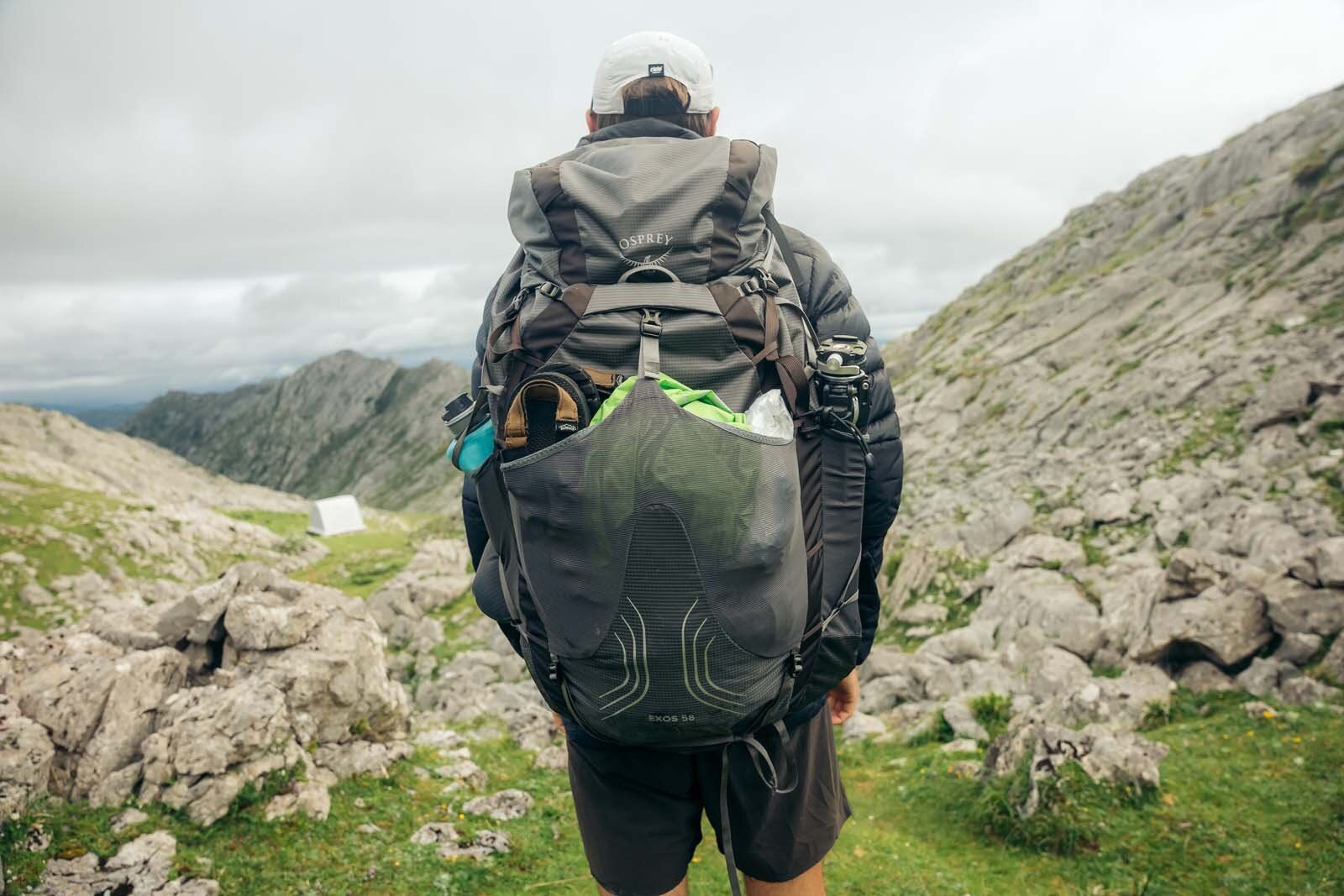
Splitting the difference between minimalist UL models and fully featured haulers, the Eja is one of the best options for those curious about lightening their load. However, it’s not as durable or lightweight as many true-blue ultralight packs.
Comfort
Organization
Weight
Durability
Water Resistance
Sustainability

The Circuit is one of the best ultralight and thru-hiking packs, period. It's available in a wide range of sizes and offers impressive load carrying for its weight. While it lacks the Dyneema construction found in many other ultralight packs, the Robic nylon is impressively hardwearing.
Comfort
Organization
Weight
Durability
Water Resistance
Sustainability
Is the Lightning 50 for You?

The Exped Lightning 50 is an excellent choice for hikers who want a lightweight pack without the comfort compromises typically associated with ultralight designs. It’s especially well-suited for long-distance backpackers, fastpackers, or anyone covering big miles who values a streamlined, efficient setup over extra features. While it’s not the most pocket-heavy or user-friendly pack in terms of organization—and the strap system can take a bit of dialing in—it excels where it matters most: carrying multi-day loads comfortably over varied terrain.
Go for it if you want a lightweight pack that’s still comfortable and supportive.
Pass on it if you prefer an ultra-padded carry, want a top lid, or anticipate carrying over 45 pounds.

hit the trail
Backpacking Gear Guides

Gear Guide
Best Backpacking Sleeping Pads of 2026
Gear Guide
Best Backpacking Tents of 2026
Gear Guide
Best Backpacking Sleeping Bags of 2026
Gear Guide
Best Trekking Poles of 2026
curated for you