
Ski Kit
Backcountry
Gear up for the ups, the downs, and everything in between.


Backcountry skiing conditions demand your attention and respect, and your gear for chasing powder outside the resort deserves careful consideration as well. In building this kit, we chose products that are specifically designed to get you out to your line and back efficiently, comfortably, and—most important of all—safely.
 Tecnica Zero G Tour Pro ($980)
 Black Crows Navis Freebird ($999)
 ATK Raider 13 Evo ($750)
 Ortovox Switchback 32 ($240)
 Patagonia Stormstride ($499)
 Patagonia Nano-Air Light Hybrid Hoody ($299)
 The North Face Summit Series Pro 120 ($90)
 Patagonia Stormstride ($449)
 Smith Summit MIPS ($260)
 Rab Khroma Tour Windstopper ($110)
 Le Bent Cody Townsend Zero Cushion ($44)
 Sweet Protection Memento Rig Reflect ($130)
 BCA Scepter Adjustable Aluminum Pole ($110)
 Mammut Barryvox S ($499)

The Zero G Tour Pro continues to set the pace in the skin track, with a combination of low weight and stiffness that shines in both the steeps and on low-angle laps. The newest version has more forward lean, making it even more fun to ski, as well as an increased range of motion.


The Navis Freebird’’s eye-catching green topsheet has been a fixture at winter trailheads for a decade now. The true people’s choice, it’s as versatile as touring skis come, with a weight and shape that make it the right pick for almost any mission.
ATK occupies a rare niche in the ski world—one of the few brands whose high prices are almost universally accepted. We tend to agree, especially with the Raider 13 Evo, a pin touring binding that delivers an unmatched balance of low weight, reliability, and downhill acumen.
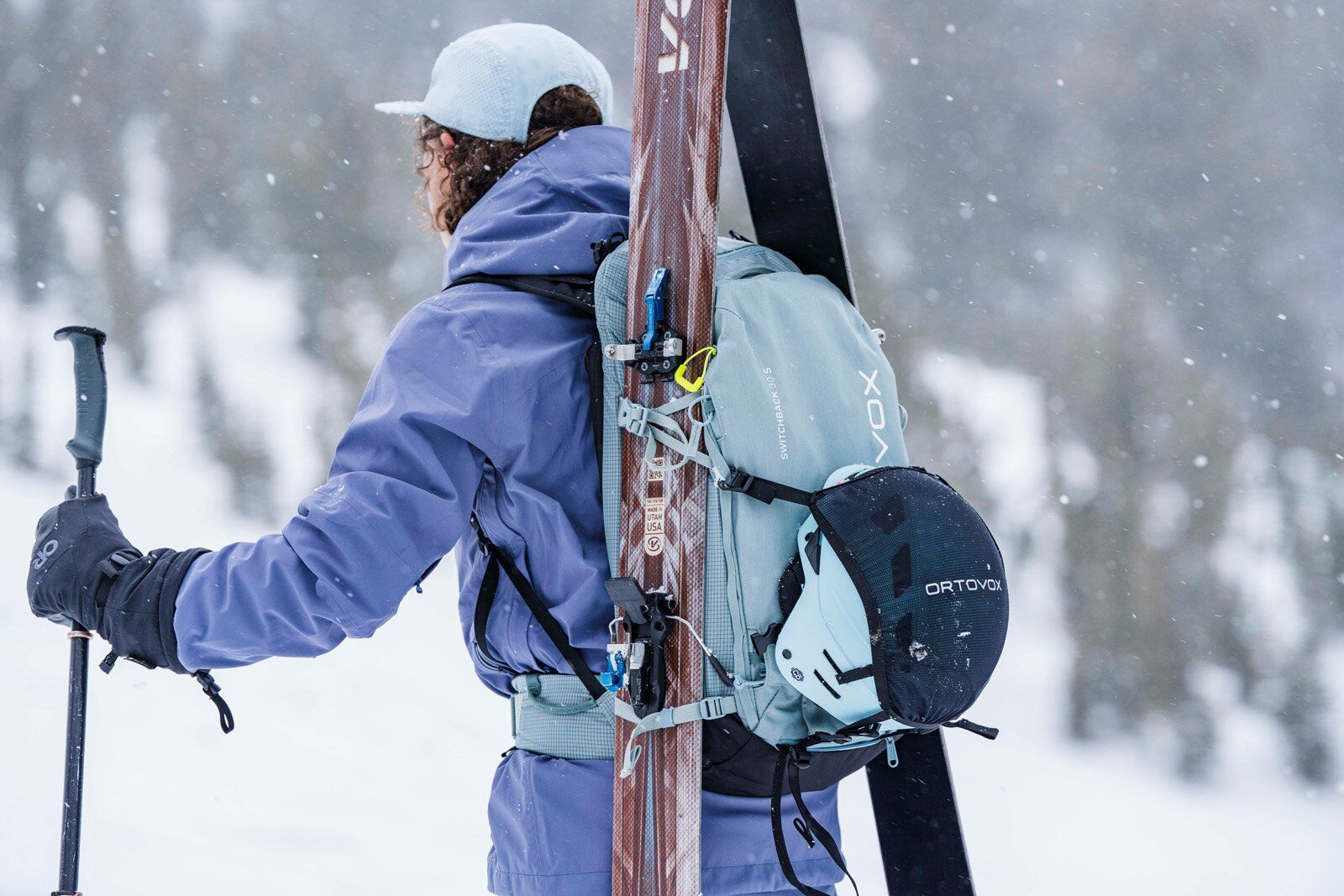


The Switchback is one of the most well-rounded ski packs we’ve tested. It’s sized just right for run-of-the-mill single-day tours, but it has a robust feature set that can handle more vertical endeavors.

Comfort & Support

Organization

Versatility

Durability

Weight

Sustainability


“Light makes right” is the ethos behind the breathable, streamlined Stormstride. It’ll prevent you from boiling over if you need to throw it on during the ascent, and its 3-layer waterproofing ably guards against precipitation when you’re far from the car.

Weather Protection

Warmth

Comfort

Breathability
Durability
Sustainability


Active insulation at its finest, the Nano-Air Light Hybrid Hoody combines light synthetic fill with fleece panels for a breathable, mobile, and comfortable jacket that’s built to move with you. It’s a great layer for starting fast out of the gates on a cold morning.
Warmth

Comfort & Mobility
Breathability

Weight & Packability

Weather Resistance
Sustainability


A wonderful option for high-output activities, the Summit Series Pro 120 is lightweight, breathable, and quick-drying. It also offers significant warmth for its thin construction, making it versatile for a range of temperatures and activity levels. However, not everyone will love the skin-tight fit.
Warmth
Breathability
Durability
Comfort

Odor Resistance
Sustainability


Like its accompanying jacket, the Stormstride pant is a protective, 3-layer shell that’s breathable enough for when the skin track takes a more, shall we say, “direct” route. Plenty of stretch means you won’t bust a seam on a kick turn, either.
Weather Protection
Warmth
Comfort
Breathability
Durability
Sustainability


Certified for both skiing and mountaineering, and with an exceptionally lightweight and breathable build, the Summit MIPS is a backcountry specialist. With no ear pads or lining, it’s out of place at the resort.
Comfort
Warmth

Ventilation

Weight & Bulk
Durability
Sustainability


Let us introduce you to one of our favorite gloves for backcountry skiing. The Khroma Tour features a supple shell, pre-curved fingers, and out-sewn seams that contribute to a refined fit and great dexterity. Just be sure you know what you’re getting: These gloves are not fully waterproof and only use thin fleece insulation.
Warmth

Waterproofing

Dexterity
Comfort
Durability
Sustainability
Is there such a thing as a touring sock? If you’re asking that, you’ve never worn the Cody Townsend Pro Series. It has a feature-rich (for a sock) design that won’t hold you back when you’re spending hours slogging uphill.

This snazzy pair of shades provides a full-coverage fit and sharp clarity at half the price (or less) of some competing models. They’re not as protective as ski goggles, but for non-stormy days, they might be all you need.
The Scepter is designed for the backcountry, with some simple quality-of-life features that you’ll find useful over the course of any tour. It also comes with a refreshingly approachable price tag.

Range, ease of use, and reliability are essential in a beacon, and the Barryvox S has those in spades. We feel most at ease when our partners are carrying this beacon, which speaks volumes. This is one piece of gear you should not skimp on.
How We Built the Backcountry Ski Kit
Out of all the ski kits we’ve put together, this one is easily the most specialized. Unlike our resort-oriented gear lists, our backcountry recommendations aren’t based on the equipment that feels the absolute best on the descent (though having fun while skiing downhill is still important) or the apparel that keeps you the warmest and driest (though we definitely factor in comfort and protection).
Instead, we prioritize gear that shines over the entire course of your tour—whether you’re huffing up the skin track, transitioning on a blustery summit, or cruising through untracked powder. This kit needs to be nimble and, in the case of apparel, breathable enough for the climb, while still capable of handling demanding weather and snow conditions on the descent. What’s more, the lighter your kit, the farther and faster you can go—so shaving ounces where possible is always top of mind. It’s a tall order for gear, which is why this setup is one of the priciest in our ski collection.

Ski Boots
It used to be that wearing a touring boot weighing less than, say, 1,400 grams meant acknowledging the sacrifices you were willing to make in downhill performance for the sake of efficiency on the ascent. That era feels like prehistory now, especially with the emergence of models like the updated Tecnica Zero G Tour Pro. A high-end backcountry boot affords a near-perfect balance between weight savings, stability, and predictable power when you rip skins. Ideally, you can ski your touring boot as hard as you want, in a variety of snow conditions, but feel featherlight and unencumbered on the uphill.
The secret sauce that grants many high-end touring boots their stiffness-to-weight ratio is their shell material. Tecnica built the Zero G Tour Pro out of Grilamid, a type of nylon known for its strength-to-weight ratio. That allowed designers to use less material to achieve a natural-feeling 130 flex than they would have if they’d made the boot with polyurethane (common in resort ski boots and heavier touring models). The injection of carbon into the Zero G’s upper cuff gives it an extra bit of backbone in the area you flex the most, allowing it to behave more like a true four-buckle boot than any other model in its weight class. You’d have to search pretty hard to find terrain it couldn’t handle, which is wild for a boot that weighs just 1285 grams. (If you want a true touring boot that can also pull double duty in the resort, the slightly burlier and slightly heavier Dynafit Tigard 130 might have your name on it.)

Skis
As with your resort setup, it’s nice to have a go-to touring ski that can handle just about anything the mountain might throw at you. The Black Crows Navis Freebird is just that: a versatile tool that’s comfortable in nearly every type of snow, plenty light for big days, and tough enough to withstand heavy use. You can easily pivot this 102-millimeter-wide ski in low-tide conditions or when you’re tree skiing, but its long effective edge (most of the ski is traditionally cambered) means you can also count on it to bite into the snow in steep terrain where a fall wouldn’t be fun.
If you’re in search of freshies, the Navis won’t float as well as a purpose-built powder ski like the Moment Deathwish Tour 112, but it can still hold its own in soft snow. Its 138-millimeter-wide shovel is actually identical in width to the Deathwish Tour’s and planes above the snow with ease despite the ski’s comparatively slender waist. Add in a skin-track-friendly weight of 1,625 grams (3 lb. 9.3 oz.) per ski that also doesn’t place the Navis in ultralight, chatter-prone territory, and you’ve got a ski that fits right in with the rest of this best-of-both-worlds kit.
Ski Bindings
The same holds true for our binding pick, the ATK Raider 13 Evo. It’s not the most minimalist pin binding on the market, but it’s still impressively light and provides a much better boot-to-ski connection than less full-featured competitors. With a heel release value that goes up to 13—plenty for most ski tourers—and the ability to set the toe-piece DIN as well (nice if you’re eyeing a steep, icy skin track with trepidation), this binding prioritizes reliability and safety. A generous amount of elasticity in the heel also makes for a more natural-feeling ride than many other bindings. Sure, the Raider 13 isn’t cheap—neither are the Zero G or the Navis, to be fair—but your knees wouldn’t want you to sell them short, would they?
When it comes to choosing backcountry skiing apparel, you can’t stick to what works in the resort. Opting for the warmest, most waterproof, and most feature-laden layers is a quick recipe for overheating and overloading yourself. That’s why we targeted pieces that provide a firm handshake agreement between protection and breathability: They won’t leave you too wet or cold, but they also won’t cause you to swamp out when you’re on the up track.
The Patagonia Stormstride jacket and pants combo is a good representation of this ethos. Both of them are made with Patagonia’s premium 3-layer waterproof material, the H2No Performance Standard membrane, so they’ll keep snow and (if you insist on getting out in it) rain from soaking through to your base layers. However, the Stormstride’s 40-denier Pertex Shield face fabric is quite thin, which—in addition to its stretch-woven construction—makes these shells airier than they’d be if they were made with a thicker material and a 3-layer Gore-Tex membrane. And this is the winning combination to look for in your backcountry-oriented shell jacket and pants: Most skiers will want 3-layer waterproof tech along with thin and stretchy shell fabrics. Of course, that also makes them a tad easier to wet out in truly horrendous wet weather, but we’d guess that you’re probably not venturing into the backcountry in much of that, anyway.
Just as your backcountry ski jacket probably isn’t the most waterproof layer you own, your midlayer jacket shouldn’t be the warmest either. Since you’ll likely wear it while churning uphill, the goal is a moderate amount of warmth paired with excellent breathability. Look for synthetic insulation or fleece, supple shell fabrics, and ventilated panels at the back or underarms. The Patagonia Nano-Air Light Hybrid is, in our opinion, the best in class: It uses 40-gram insulation in the torso and along the tops of the arms—most light synthetics, including the popular Arc’teryx Atom, use 60- or even 80-gram fill—and R1 Air fleece at the back, sides, and underarms. The Nano-Air offers a welcome alternative to the “be bold, start cold” mantra. In chilly weather and faced with an ascent right out of the parking lot, it lets you start comfy and remain comfy as you churn uphill.
Finally, the best base layer for backcountry skiing will prioritize breathability over outright warmth. The North Face’s Summit Series Pro 120 Crew follows in the Nano-Air’s footsteps as an ultra-breathable next-to-skin layer that’s a lot thinner and lighter than its resort skiing equivalents. We chose this polyester model over a merino wool base layer because polyester dries much faster, and ski touring is one of the sweatiest outdoor activities on the planet.
The safety and storage gear you need for the backcountry is just as specialized as all of the other hard goods in this kit. It’s essential that your ski backpack has a designated pocket for securing your avalanche shovel and probe, as well as intuitive storage for everything else you’re bringing with you. Storage is one of the highlights of the Ortovox Switchback 32, which is one of the most versatile ski packs we’ve tested. A zippered hipbelt pocket and a stretchy shoulder pocket serve as easily reachable snack holders, and the roomy main compartment (accessible through the backpanel, a design that lets you grab items quickly while keeping them out of the snow) includes a hydration sleeve. There’s also external storage for ice tools and a rope if you’re getting technical. Finally, the Switchback’s comfortable, supportive backpanel feels just as good on slow days spent hopping low-angle meadows as it does when you’re screaming down a tight couloir.
Like all good ski packs, the Switchback has a dedicated helmet keeper on the dorsal side, which is where you’ll be storing the Smith Summit MIPS. We’re blessed with a host of backcountry-specific helmets on the market these days (they all have some combination of light weight and breathability, in varying amounts), and the Summit is probably our favorite. It’s airy and low-profile—we love that its Boa fit system tucks away when you store it—with a minimalist design that’s still comfortable over the course of a long mission. Plus, it costs less than other touring lids with comparable performance. This is a burgeoning category, as we said, and ski helmet brands are taking note.
It’s not the marquee item in this kit, but it may be the most important: The Mammut Barryvox S is unquestionably one of the best beacons you can buy, and we don’t recommend cutting corners when it comes to avalanche safety gear. With a 70-meter detection range that’s well above average and one of the most intuitive user interfaces on the market, the Barryvox S can make the search and rescue process more efficient than with an inferior beacon. (Hopefully you’ll never need to put it into full practice, but you should, of course, know how it works.) It also has easy group-check and multiple-signal indicators, which can help streamline the beginning of your tour (always do a beacon check!) and practice rescue scenarios.
We’re big fans of gear that simplifies any part of our days in the backcountry, and that’s why we like the BCA Scepter Adjustable Aluminum Pole. The extended nub at the top of its grip makes flipping your heel risers up and down, locking and unlocking your toe piece, and sometimes even adjusting your buckles without bending down a cinch. The extended grip takes the unpleasant feel of cold metal out of the equation when you’re choking up on the pole for sidehilling, and the pole strap is releasable, which provides peace of mind and safety for tree skiing and lines in avalanche terrain. Just like every other gear pick in this kit, the Scepter has the means and the mettle (it has a full aluminum build) to thrive in the backcountry.
As with resort ski gear, there’s a wide variety of backcountry-specific products on the market. If some of our picks don’t work for you, these might.
- Ski Boots: Dynafit Ridge Pro, Scarpa 4-Quattro Pro
- Skis: Moment Wildcat Tour 108, Volkl Blaze 104
- Ski Bindings: Marker Alpinist 12, ATK Hy 13 Free
- Ski Backpack: Osprey Soelden 32, Raide LF 30L
- Ski Jacket: Outdoor Research Cloudchaser 3L, Norrøna Lofoten Gore-Tex Pro
- Ski Pants: Black Diamond Recon Stretch, Arc’teryx Rush
- Helmet: Salomon Mtn Lab, Giro Grid Spherical
- Glove: Showa Temres 282-02
- Ski Poles: Black Diamond Expedition 3, Folkrm Wy'east
- Avalanche Beacon: Ortovox Diract Voice, Arva Evo BT
Is the Backcountry Ski Kit for You?
Identifying the target skier for this kit is actually pretty simple: If you spend more time making turns outside the resort than in it, our picks are made with you in mind. Folks who are still learning the backcountry ropes and aren’t sure if they fit that description might want heavier, less specialized hybrid gear that also performs well in the resort. (Check out our Crossover Ski Kit and Backcountry Skiing Starter Kit for those products.) But winter warriors who obsessively track their human-powered vert and read the avy report every day will thrive with any of the gear you see above.


